

The Wild Way Home
£ 12.99
Learning Outcome:
Write a short narrative that creates excitement, action, tension and suspense. Convey a sense of danger and risk, embedding dialogue effectively.
The Wild Way Home
by Sophie Kirtley
- Instant digital downloads
- Complete lesson plans & resources
- Suggested adaptations to support all learners
- Mapped to UK National Curriculum
 Learning Outcomes
Write a short narrative that creates excitement, action, tension and suspense. Convey a sense of danger and risk, embedding dialogue effectively.
Curriculum Objectives- Identify how language, structure and presentation contribute to meaning.
- Discuss and evaluate how authors use language, including figurative language, considering the impact on the reader.
- Draft and write by selecting appropriate grammar and vocabulary, understanding how such choices can change and enhance meaning.
- Use semi-colons, colons or dashes to mark boundaries between independent clauses.
- In narratives, describe settings, characters and atmosphere and integrating dialogue to convey character and advance the action.
- Propose changes to vocabulary, grammar and punctuation to enhance effects and clarify meaning.
- Write legibly, fluently and with increasing speed.
£12.99

After the Fall
£ 12.99
Learning Outcome:
Write a first-person narrative retelling of a familiar nursery rhyme, playing with perspective.
After the Fall
by Dan Santat
- Instant digital downloads
- Complete lesson plans & resources
- Suggested adaptations to support all learners
- Mapped to UK National Curriculum
Learning OutcomesWrite a first-person narrative retelling of a familiar nursery rhyme, playing with perspective.
Curriculum Objectives- Prepare poems and plays to read aloud and to perform, showing understanding through intonation, tone and volume so that the meaning is clear to an audience.
- Participate in discussions, presentations, performances, role play, improvisations and debates.
- Identify and discussing themes and conventions in and across a wide range of writing.
- Discuss and evaluate how authors use language, including figurative language, considering the impact on the reader.
- Link ideas across paragraphs using a wider range of cohesive devices: repetition of a word or phrase, grammatical connections and ellipsis.
- Use commas to clarify meaning or avoid ambiguity in writing
- Identify the audience for and purpose of the writing, selecting the appropriate form and using other similar writing as models for their own.
- Use a wide range of devices to build cohesion within and across paragraphs.
- Plan writing by considering how authors have developed characters and settings in what pupils have read, listened to or seen performed.
- Draft and write by selecting appropriate grammar and vocabulary, understanding how such choices can change and enhance meaning.
- To evaluate and edit by proposing changes to vocabulary, grammar and punctuation to enhance effects and clarify meaning.
- Write legibly, fluently and with increasing speed.
£12.99
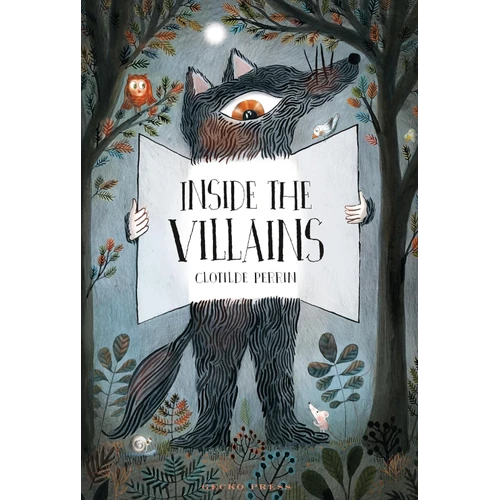
Inside the Villains
£ 12.99
Learning Outcome:
Write ‘All About Me’ pages for three malevolent fairy tale characters.
Write a personal statement/personality card in role as The Troll, as an entry for Inside the Villains.
Write the story of The Three Billy Goat’s Gruff from The Troll’s perspective.
Inside the Villains
by Clotilde Perrin
- Instant digital downloads
- Complete lesson plans & resources
- Suggested adaptations to support all learners
- Mapped to UK National Curriculum
Learning OutcomesWrite ‘All About Me’ pages for three malevolent fairy tale characters.
Write a personal statement/personality card in role as The Troll, as an entry for Inside the Villains.
Write the story of The Three Billy Goat’s Gruff from The Troll’s perspective.
Curriculum Objectives- Increase their familiarity with a wide range of books, including myths, legends and traditional stories, modern fiction, fiction from our literary heritage, and books from other cultures and traditions.
- Identify and discuss themes and conventions in and across a wide range of writing, making comparisons within and across books.
- Use brackets, dashes or commas to indicate parenthesis
- Use a colon to introduce a list.
- Use semi-colons, colons or dashes to mark boundaries between independent clauses.
- In narratives, describing settings, characters and atmosphere and integrating dialogue to convey character and advance the action.
- Plan their writing by identifying the audience for and purpose of the writing, selecting the appropriate form and using other similar writing as models for their own.
- Use relative clauses beginning with who, which, where, when, whose, that or with an implied (i.e. omitted) relative pronoun.
- Evaluate and edit by assessing the effectiveness of their own and others’ writing, proposing changes to vocabulary, grammar and punctuation to enhance effects and clarify meaning.
- Proof-read for spelling and punctuation errors.
- Write legibly, fluently and with increasing speed.
£12.99
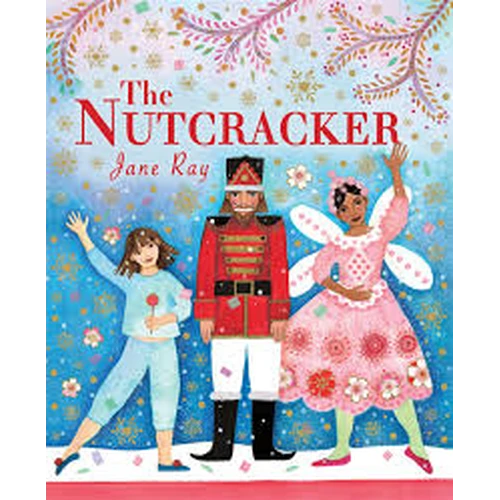
The Nutcracker
£ 12.99
Learning Outcome:
Write a description of the Christmas tree.
Write a recount of the battle between the Mouse King and the Nutcracker.
Write a description of The Kingdom of Sweets.
The Nutcracker
by Jane Ray
- Instant digital downloads
- Complete lesson plans & resources
- Suggested adaptations to support all learners
- Mapped to UK National Curriculum
Learning OutcomesWrite a description of the Christmas tree.
Write a recount of the battle between the Mouse King and the Nutcracker.
Write a description of The Kingdom of Sweets.
Curriculum Objectives- Participate in discussion about both books that are read to them and those they can read for themselves, taking turns and listening to what others say.
- Check that the text makes sense to them, discussing their understanding and explaining the meaning of words in context.
- Plan their writing by discussing and recording ideas.
- Discuss writing similar to that which they are planning to write in order to understand and learn from its structure, vocabulary and grammar.
- In narratives, creating settings, characters and plot.
- Use conjunctions, adverbs and prepositions to express time and cause.
- Participate in discussions, presentations, performances, role play, improvisations and debates.
- Use the diagonal and horizontal strokes that are needed to join letters and understand which letters, when adjacent to one another, are best left unjoined.
£12.99

High quality, curriculum-aligned English and Literacy lesson plans for UK primary schools. Crafted by teachers for teachers.
Year Groups
Navigation
Legal
© The Teaching Bookshelf | All Rights Reserved
Website Design & Support by Orange Pixel